
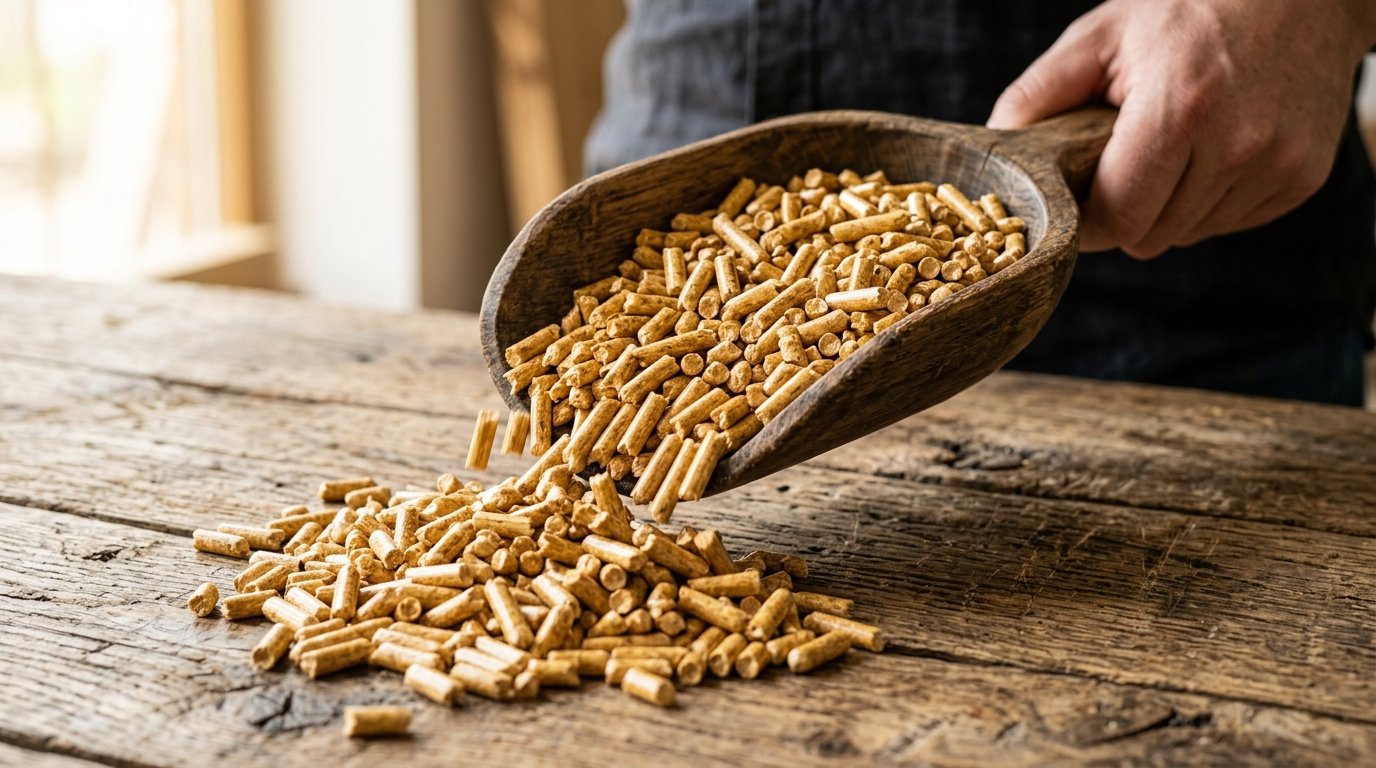
Decoding calorific value metrics (net vs gross heating value): how choosing certified pellets with ≥ 4.92 kWh/kg saves hundreds of euros across the winter season compared to low-efficiency biofuel.
1. Lower Heating Value (LHV) vs Higher Heating Value (HHV)
Gross calorific value (HHV) measures total heat including latent steam condensation, but standard boilers cannot extract this latent heat. The true measure of real heat is Lower Heating Value (LHV / net calorific value), which for our ENplus A1 pellets exceeds ≥ 4.92 kWh/kg (~17.7 MJ/kg).
2. Annual Heating Cost Savings
Burning pellets with 4.92 kWh/kg instead of inferior 4.4 kWh/kg fuel means consuming 10% to 12% fewer tonnes of pellets for the exact same indoor warmth, saving substantial money every year.
3. Verified Laboratory Certification
Every batch produced at our Latvian mill is tested by accredited laboratories to guarantee compliant calorific output, density, and moisture.
Key Takeaways:
- Always check the net calorific value (LHV), which should exceed 4.9 kWh/kg.
- High energy density translates into lower annual fuel consumption.
- Order high-energy ENplus A1 pellets directly at hardwoodindustry.org/shop.html.