
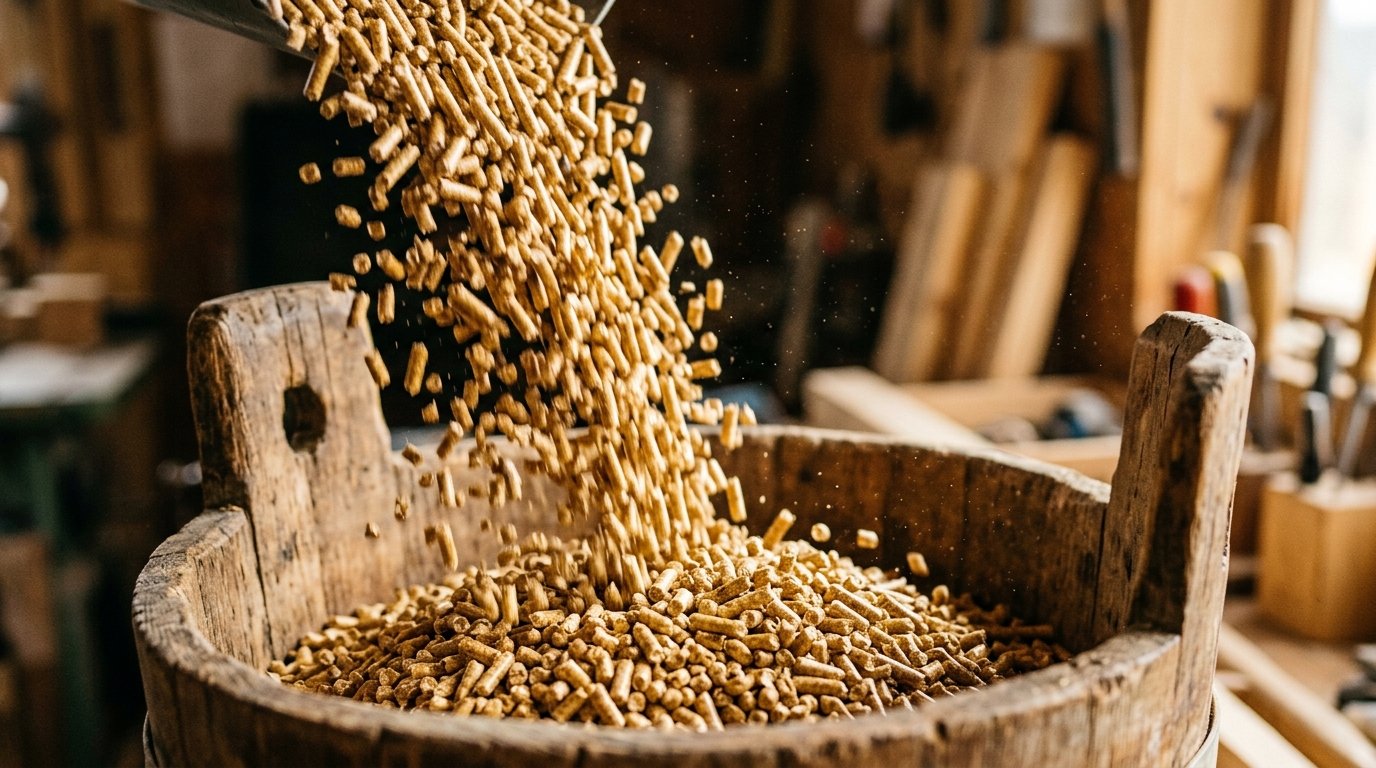
At the start of the heating season, many buyers ask: is it worth paying a modest premium for ENplus® A1 certified wood pellets, or is it more economical to choose A2 grade or uncertified biofuel? Factory direct producer hardwoodindustry.org breaks down the laboratory parameters that protect your boiler and fuel budget.
1. Ash Content and Cleaning Frequency
European standard ISO 17225-2 establishes strict ceilings for biomass fuel quality. For ENplus A1 grade, ash content at 550°C must not exceed 0.7% of dry mass. By comparison, A2 allows up to 1.2%, and uncertified industrial pellets often yield 2.0% or more. At our Augšlīgatne mill, 100% debarked pine and spruce sawdust produces an ash content of just 0.38%, producing only 3.8 kg of ash per tonne compared to 12–15 kg with A2 pellets.
2. Ash Melting Temperature and Burner Clinker (Slag)
Even more critical than ash quantity is ash deformation temperature (DT). When pellets contain sand or bark residues, ash melts at temperatures as low as 1100°C, solidifying into vitrified rock clinkers that choke burner air nozzles. Our A1 pellets feature ash melting points exceeding > 1250°C, ensuring ash remains a fine, dry powder that falls freely into the collection tray.
3. Heating Equipment Warranty and Maintenance Costs
Leading European boiler manufacturers (Viessmann, Atmos, Defro, Pellux) stipulate in warranty terms that coverage requires certified ENplus A1 fuel. Using substandard pellets voids warranty protection for burner grates and electric igniter elements. Explore verified products at hardwoodindustry.org/shop.html.
Key Takeaways:
- A1 pellets deliver up to 15% more usable heat per tonne than low-grade biofuel.
- Boiler operates reliably without shutdown errors during peak winter cold.
- Place your factory-direct order with zero prepayment at hardwoodindustry.org/checkout.html.