
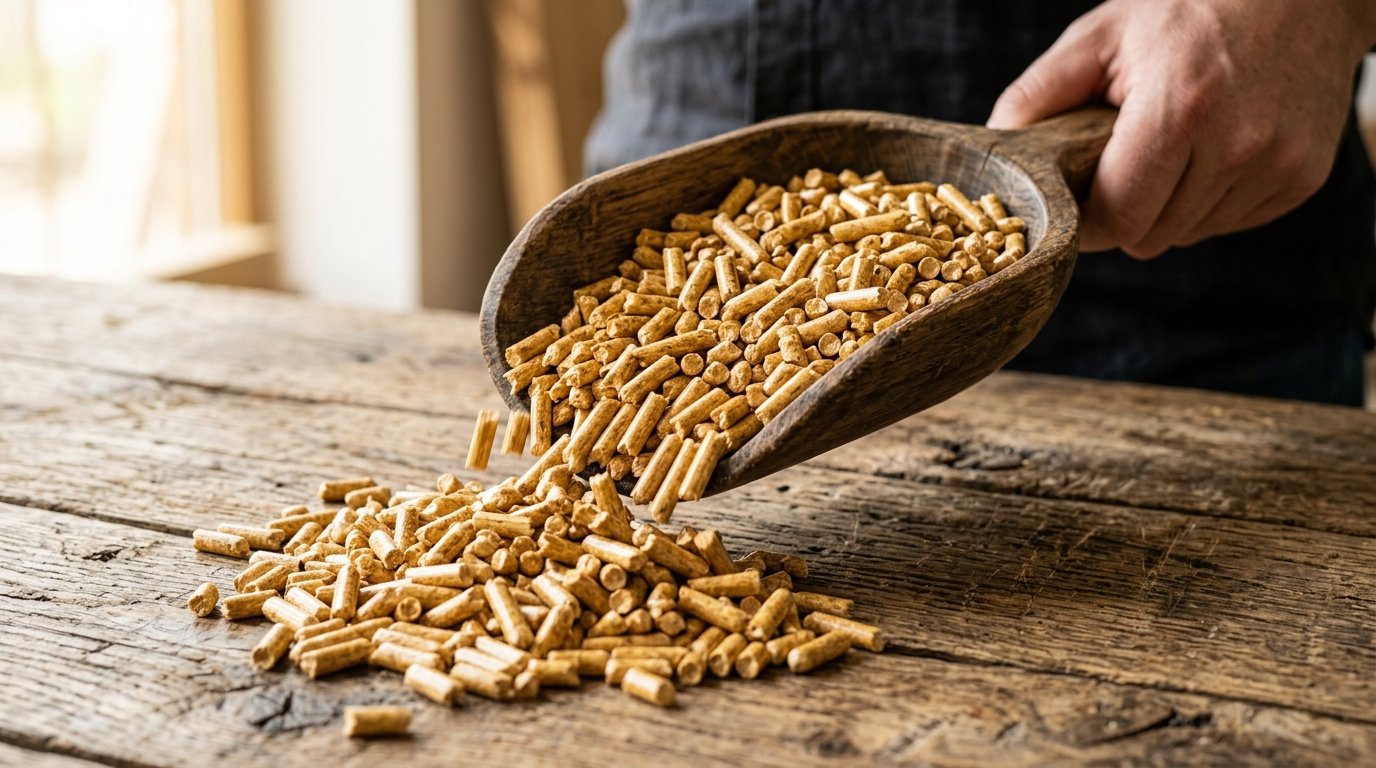
Moisture content is the single most critical factor determining how much real heat energy reaches your radiators. Learn why certified wood pellets with moisture ≤ 7% provide superior heating economics compared to damp fuel.
1. Latent Heat Loss: Paying to Boil Water
When wood pellets contain high moisture (10% or more), a substantial portion of the furnace heat is wasted converting water into steam before any useful thermal output enters the heating circuit. Every additional percentage point of moisture reduces effective calorific output and lowers combustion temperatures.
2. Creosote Formation and Flue Acid Corrosion
Excess moisture produces wet, corrosive flue gases that condense inside chimney liners, depositing sticky creosote that increases chimney fire risk. High-efficiency pellets burn with clean, dry exhaust gases that keep heat exchangers free from tar accumulation.
3. Preventing Moisture Absorption During Storage
Because dry pellets are hygroscopic, keep bagged pallets elevated off cold concrete floors and stored inside dry rooms to maintain peak combustion efficiency.
Key Takeaways:
- Moisture under 7% yields a net heating value exceeding 4.92 kWh/kg.
- Dry pellets protect chimney liners and boiler turbulators from acid pitting.
- Source moisture-guaranteed factory pellets at hardwoodindustry.org/shop.html.